
How to make jalebi recipe without yeast comes down to two things most people miss: getting a batter that can hold a spiral, and frying at a steady temperature so it turns crisp before it soaks up oil.
If you have ever tried jalebi at home and ended up with limp coils, broken shapes, or syrup that never really clings, you are not alone. Yeast recipes can hide a few mistakes because fermentation adds structure and tang, but no-yeast jalebi asks you to be a bit more intentional.
This guide keeps it practical: a reliable batter, a quick syrup that tastes right, a short troubleshooting table, plus small technique cues that make a bigger difference than adding extra ingredients.
What “no-yeast” jalebi really means (and why texture changes)
No-yeast jalebi usually relies on chemical leavening like baking powder or baking soda plus acidity (yogurt, lemon juice) instead of fermentation. That gives you lift, but not the same tang or elastic structure yeast can develop.
So the realistic goal is: crisp edges, set center, syrup that coats and soaks in lightly. You can still get a lovely bite, but the window is narrower, meaning timing and temperature matter more.
According to USDA, keeping hot foods out of the “danger zone” matters for food safety; in home cooking that translates into not leaving dairy-based batter sitting warm for long periods, especially if your kitchen runs hot.
Ingredients that work well in the US (with easy swaps)
You can make this with supermarket staples. If you have access to an Indian grocery, great, but you do not need it.
Batter
- All-purpose flour (maida equivalent): structure
- Cornstarch: helps crispness
- Plain yogurt: mild acidity, better texture
- Baking powder (or baking soda): quick lift
- Turmeric or orange food color: optional, for classic look
- Water: to adjust piping consistency
Sugar syrup
- Sugar + water: base
- Lemon juice: reduces crystallization risk
- Cardamom (powder or crushed pods): aroma
- Rose water or saffron: optional, “jalebi shop” vibe
Oil choice: neutral oils like canola, vegetable, peanut. Ghee adds flavor but can be pricey; many home cooks do a mix.
How to make jalebi recipe without yeast (step-by-step)
This version targets repeatable results, even if you are not used to piping batter into hot oil.
1) Make a 1-string syrup (lightly sticky, not thick)
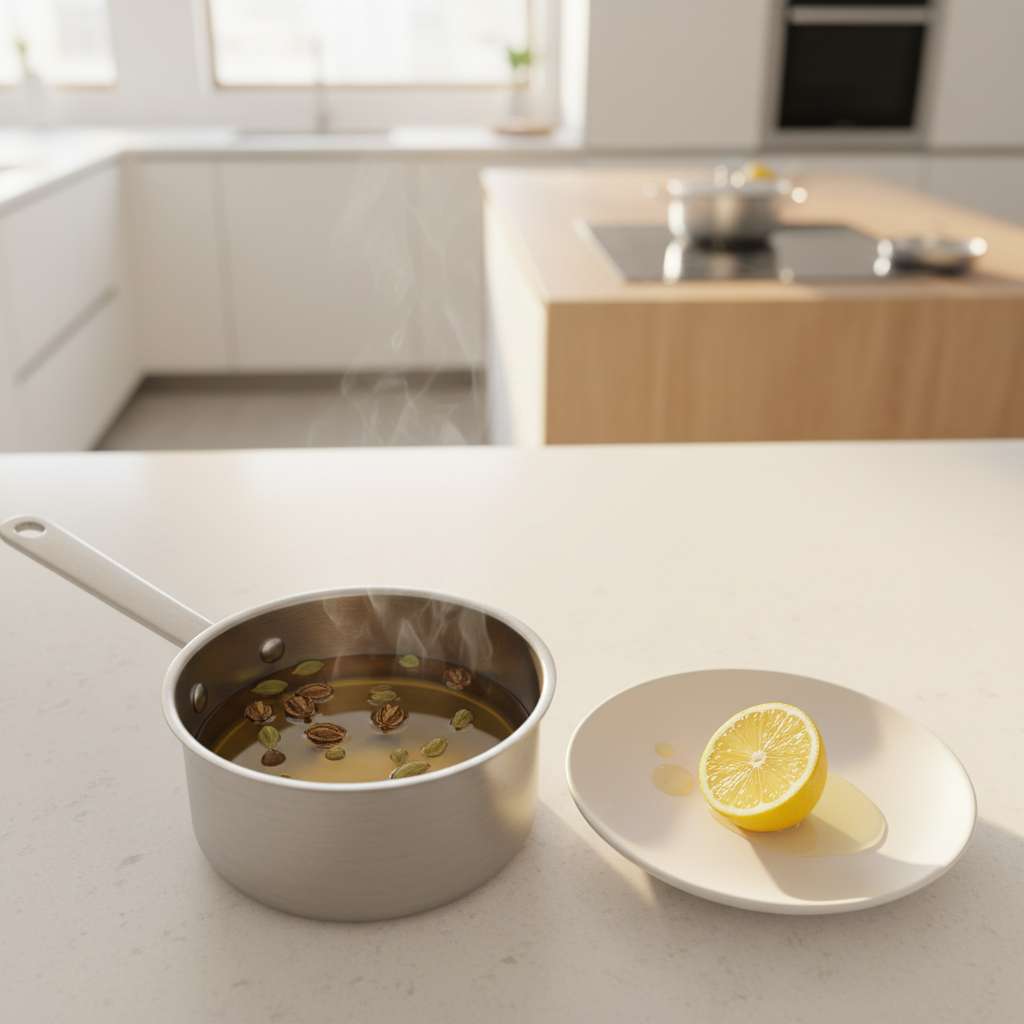
In a saucepan, add 1 cup sugar + 1/2 cup water. Bring to a simmer, stir just until dissolved, then simmer 6–10 minutes.
- Add 1 tsp lemon juice halfway through.
- Turn off heat when it feels slightly sticky between fingers after cooling a drop.
- Stir in 1/4 tsp cardamom and a few drops rose water (optional).
Keep syrup warm, not boiling, while you fry. If it gets too hot, jalebi can turn soft quickly.
2) Mix the batter to a “thick ribbon” consistency
In a bowl, whisk:
- 1 cup all-purpose flour
- 2 tbsp cornstarch
- 1/2 cup plain yogurt
- 1/2 tsp baking powder (or 1/4 tsp baking soda)
- Pinch turmeric or a tiny bit of orange color (optional)
- About 1/2 cup water, added slowly
You want batter that falls in a thick ribbon and holds a line for a moment. Too thin and spirals merge, too thick and it breaks while piping.
Rest 10–15 minutes. Not hours. In many kitchens, a long rest makes no-yeast batter unpredictable.
3) Pipe, fry, flip, then soak
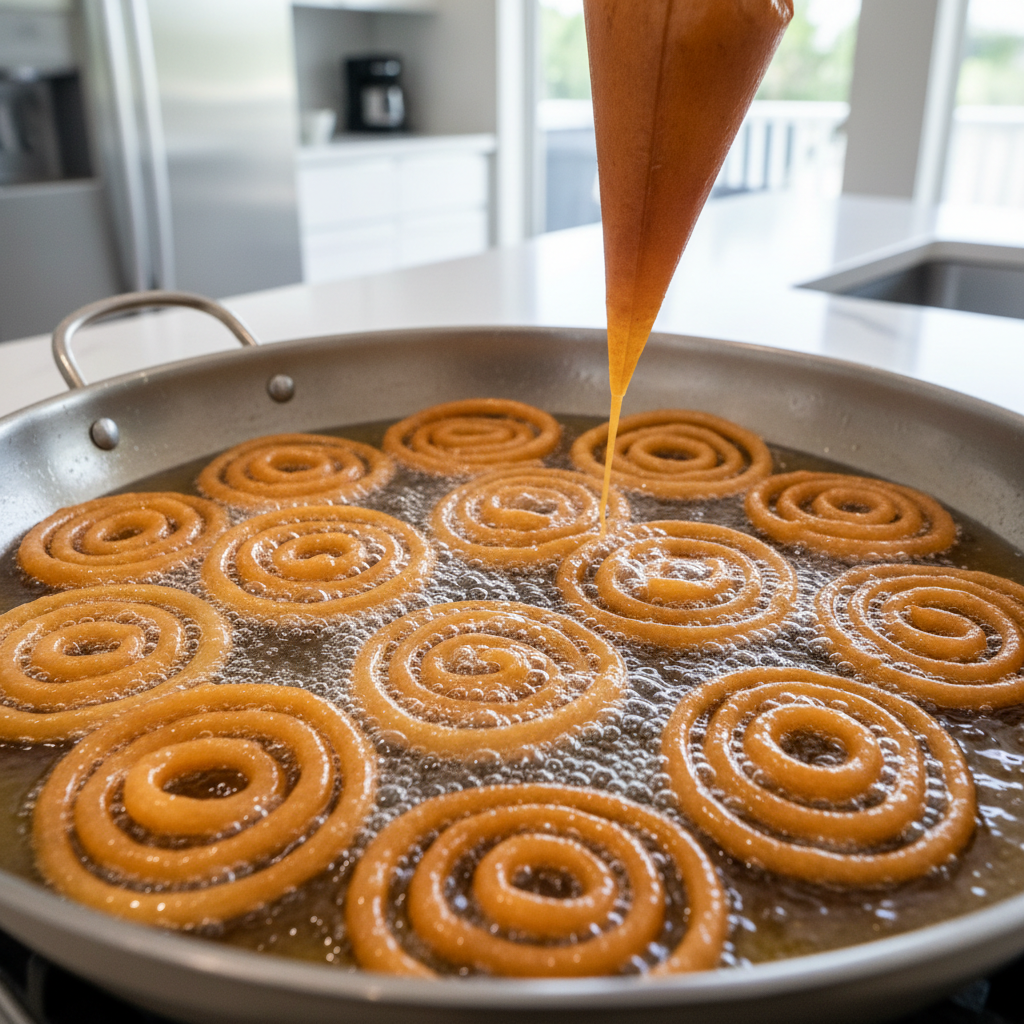
- Heat oil in a wide pan to medium. If you have a thermometer, around 350°F is a solid target. No thermometer: a tiny batter drop should rise steadily with bubbles, not instantly brown.
- Fill a squeeze bottle or piping bag with a small round tip.
- Pipe spirals into oil, start in the center, circle outward, then quickly cross once or twice to “lock” the shape.
- Fry until set, flip, fry to a deeper golden-orange.
- Drain 10–20 seconds, then dip into warm syrup 20–40 seconds.
- Lift, let excess syrup drip, place on a rack.
That last rack step matters more than people think. A plate traps steam, and steam softens crispness fast.
Quick self-check: why your jalebi fails (and what it usually means)
If you are troubleshooting how to make jalebi recipe without yeast, start here. Most issues map to one of three causes: batter thickness, oil temperature, syrup consistency.
| Problem | Likely cause | Fix |
|---|---|---|
| Spirals break while piping | Batter too thick or tip too small | Add 1–2 tbsp water, use a slightly wider opening |
| Coils spread and merge | Batter too thin, oil not hot enough | Whisk in 1–2 tbsp flour, raise heat slightly |
| Jalebi tastes oily | Oil too cool, long fry time | Fry hotter, do smaller batches |
| Hard, toothy jalebi | Syrup too thick or soak too short | Thin syrup with a splash of water, soak a bit longer |
| Turns soggy after 10 minutes | Syrup too hot or jalebi over-soaked | Keep syrup warm only, shorten dip, cool on rack |
Technique tips that make it “easy” (even on your first try)
Jalebi is not hard, it is just unforgiving when you try to multitask. A few small habits make this feel simple.
- Set up a line: pan of oil, rack, syrup pot, then serving plate. Less dripping, less panic.
- Keep batches small: 3–5 spirals per round, so oil temperature stays steady.
- Use a squeeze bottle if you can: it gives better control than a zip bag with a cut corner.
- Color is your timer: pale jalebi often turns soft in syrup, deeper golden-orange holds up.
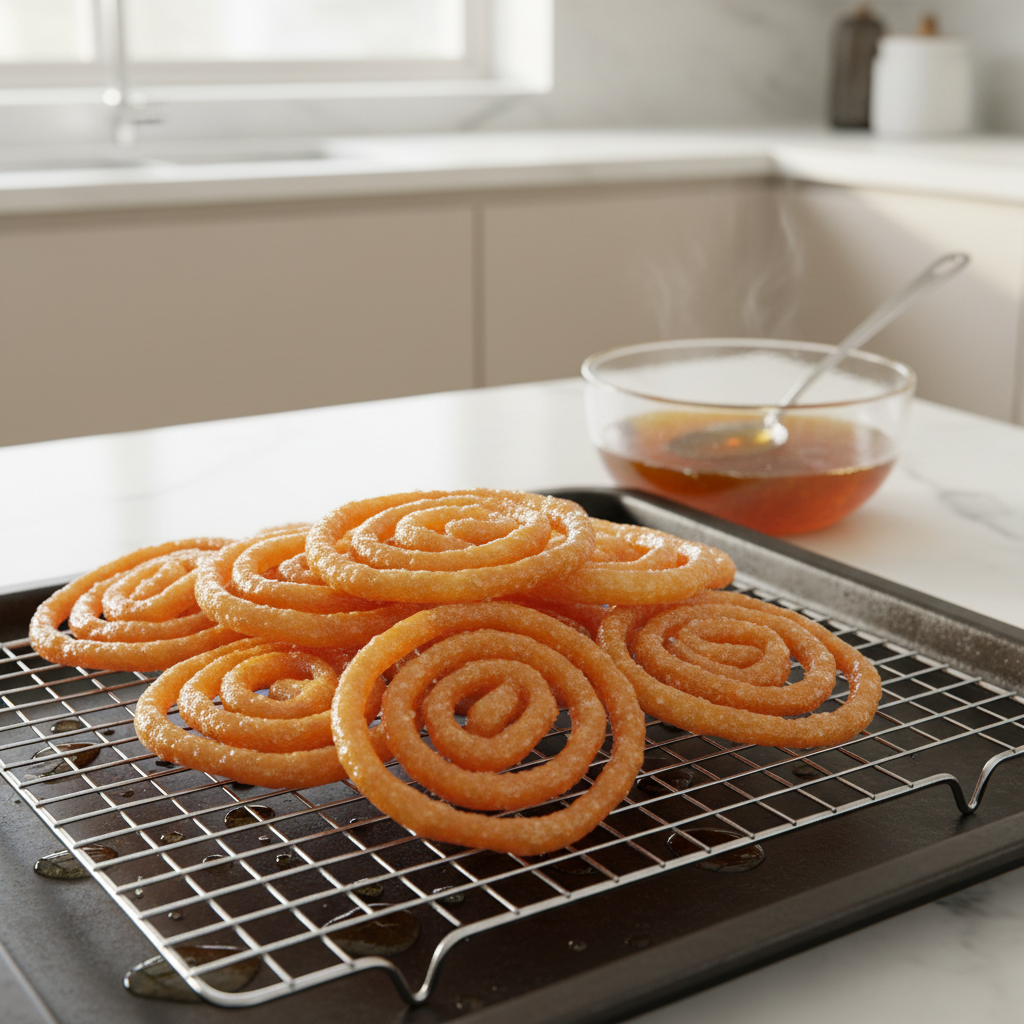
Key point: syrup should coat, not cook. If your syrup is aggressively bubbling, take it off the heat and wait a minute.
Serving, storing, and reheating (realistic expectations)
Fresh jalebi wins, especially without yeast. In many homes it stays enjoyable for a few hours, then gradually softens.
- Serve: plain, with chai, or with vanilla ice cream for a fun US-style twist.
- Store: loosely covered at room temp for the same day. Airtight containers trap moisture and speed sogginess.
- Reheat: a few minutes in a toaster oven at low heat can bring back some crispness, but it will not be exactly like fresh.
If you are serving guests, consider frying right before eating, then soaking and plating in rounds. It feels extra, but it saves the texture.
Common mistakes and safety notes
Hot oil and syrup are the only real “risk zones” here, and both deserve respect.
- Overcrowding the pan: drops oil temp, increases splatter, and gives oily jalebi.
- Frying too hot: outside browns before inside sets, then syrup makes it collapse.
- Guessing syrup: if it is thick like honey, expect a hard bite.
- Kids nearby: consider a splash guard, keep handles turned in.
According to FDA, hot liquids can cause serious burns quickly; if you are new to deep frying, use a deeper, heavier pan and avoid rushing the piping step.
Conclusion: a no-yeast jalebi you can actually repeat
If your goal is how to make jalebi recipe without yeast in a way that feels easy, focus on consistency over complexity: a thick-ribbon batter, medium-hot oil, and warm syrup that stays light.
Make one small batch as a “calibration run,” tweak batter thickness by tablespoons, and do not skip the cooling rack. Once those pieces click, jalebi stops feeling like a special-occasion mystery and starts feeling like a doable weekend treat.
Action idea: next time, write down your oil temperature estimate and syrup simmer time, that tiny note helps you repeat results.