
How to Bake a Cake From Scratch (Easy, Reliable, and Homemade)
How to bake a cake from scratch feels intimidating until you realize most “fails” come from a few small, fixable details, not a lack of talent. If you want a cake that tastes homemade, bakes evenly, and doesn’t turn dry by the next day, you’re in the right place.
A lot of beginner recipes either overcomplicate the process or skip the why, then you’re left guessing when your cake domes too high, sinks in the middle, or sticks to the pan. Baking is more forgiving than people think, but it does reward consistency.
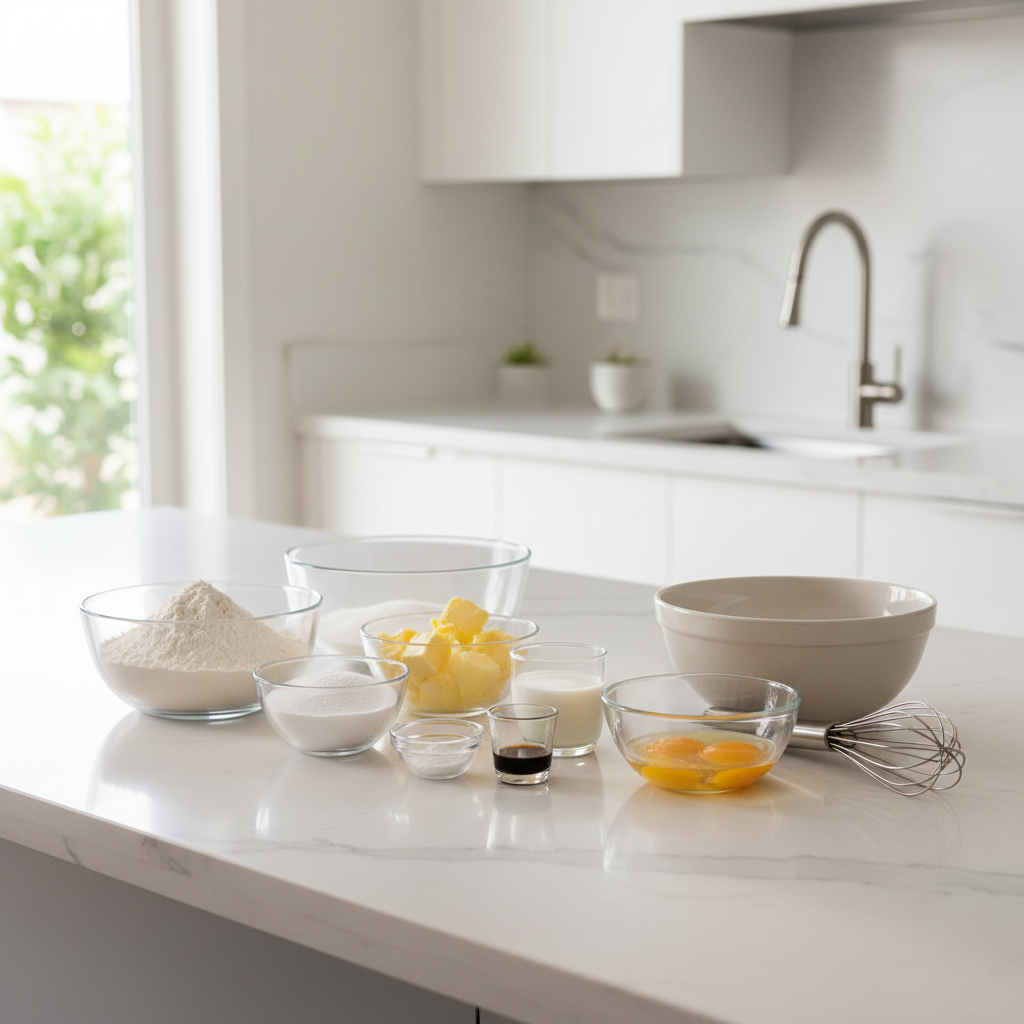
Below you’ll get a straightforward base cake method, a quick decision table, and practical cues for mixing and doneness, so you can make a classic vanilla-style layer cake and customize from there without feeling like you’re gambling.
What “from scratch” actually means (and what matters most)
When most people search how to bake a cake from scratch, they usually mean: no boxed mix, simple pantry ingredients, and a texture that tastes like a real bakery cake at home. That’s achievable, but “scratch” doesn’t require fancy tools or rare ingredients.
What matters most is technique: accurate measuring, room-temperature ingredients (when possible), and not overmixing once flour goes in. According to King Arthur Baking, overmixing after adding flour can develop gluten and lead to a tougher cake, so you’re aiming for “just combined,” not perfectly beaten.
Also, pick the right cake style for your goal. A butter cake (creaming butter and sugar) gives a classic, sturdy crumb. A sponge-style cake can be lighter but is easier to over-deflate. For an “easy” scratch cake, butter cake wins most days.
Your quick ingredient + pan cheat sheet
If you’re baking under time pressure, this section saves you from mid-recipe panic. Here’s how ingredients behave, plus what pan choices do to bake time and texture.
Core ingredients and what they do
- Flour: All-purpose flour works well for most home cakes. Cake flour makes a finer crumb but isn’t mandatory.
- Sugar: Sweetness, browning, moisture retention. Cutting it too much can make cake dry and dense.
- Butter or oil: Butter brings flavor, oil keeps cakes softer longer. A butter-based cake still stays tender if you don’t overbake.
- Eggs: Structure and richness. Cold eggs can make batter curdle, but it usually smooths out once flour goes in.
- Leavening: Baking powder is the common choice for vanilla cakes. Expired baking powder often causes low rise.
- Milk/buttermilk: Moisture and tenderness. Buttermilk adds tang and can soften crumb.
Pan options and what to expect
| Pan | Typical bake time (350°F) | Best for | Watch-outs |
|---|---|---|---|
| Two 8-inch round pans | 25–35 min | Layer cake, frosting-friendly | Overfilling can dome or spill |
| Two 9-inch round pans | 22–30 min | Flatter layers, quicker bake | Can dry faster if overbaked |
| 9x13-inch pan | 28–40 min | Easy sheet cake, casual serving | Edges brown sooner than center |
| 12-cup muffin tin | 16–22 min | Cupcakes, portion control | Overmixing shows up quickly |
Easy base recipe: classic vanilla scratch cake (adaptable)
This is the core method many home bakers use again and again. It’s not “the only way,” but it’s reliable, forgiving, and tastes like you made something real.
- Makes: two 8-inch layers (or one 9x13)
- Oven: 350°F
Ingredients
- 2 1/2 cups all-purpose flour
- 2 1/2 tsp baking powder
- 1/2 tsp fine salt
- 1 cup (2 sticks) unsalted butter, room temp
- 1 3/4 cups granulated sugar
- 4 large eggs, ideally room temp
- 1 tbsp vanilla extract
- 1 cup milk (whole milk is common; 2% usually works)
Instructions (the “don’t overthink it” version)
- Prep pans: Grease, line bottoms with parchment, then lightly flour the sides. This step prevents the classic “stuck layer” heartbreak.
- Mix dry: Whisk flour, baking powder, salt in a bowl.
- Cream: Beat butter and sugar until lighter and fluffy, around 2–4 minutes with a mixer. Scrape the bowl once or twice.
- Add eggs: Add eggs one at a time, mixing until mostly combined, then add vanilla.
- Alternate dry + milk: Add dry mix in 3 additions, milk in 2 additions, mixing on low. Stop as soon as you don’t see dry flour streaks.
- Bake: Divide batter evenly, bake until the center springs back and a toothpick comes out with a few moist crumbs.
- Cool: Cool 10–15 minutes in pans, then turn out onto a rack to cool fully before frosting.
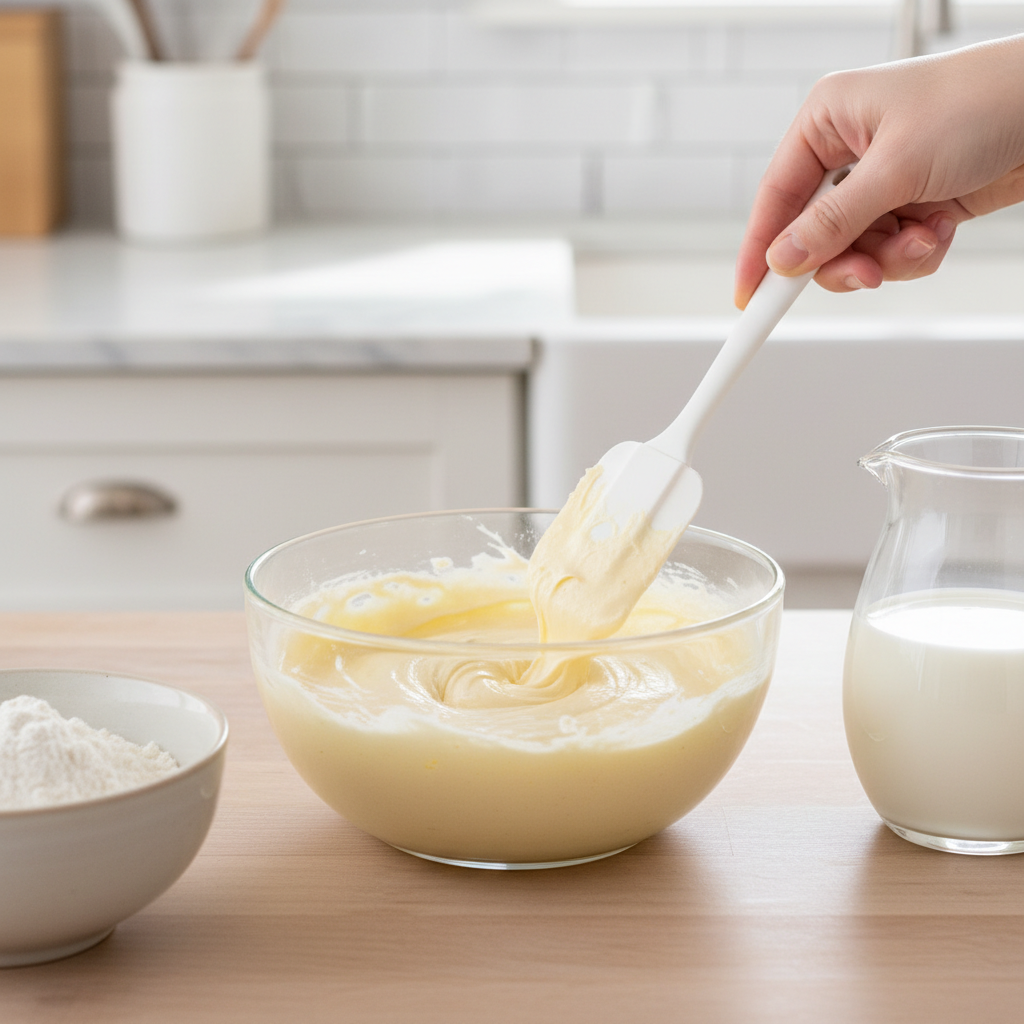
Key point: If you keep mixing until the batter looks “extra smooth,” you can push the crumb toward chewy. A few tiny lumps are usually fine.
Self-check: why scratch cakes go wrong (and how to spot your issue fast)
Most people don’t need a new recipe, they need a better diagnosis. Use this quick list to identify what’s most likely happening in your kitchen.
- Cake sinks in the middle: oven door opened too early, underbaked center, too much leavening, or batter over-aerated then collapsed.
- Dry cake: overbaked by even 3–6 minutes, too much flour from scooping the measuring cup, or not enough fat/liquid for your flour brand.
- Dense/tough texture: overmixing after flour, cold butter that never creamed well, or expired baking powder.
- Sticks to the pan: skipped parchment, pan not greased well enough, or unmolded too late after cooling in-pan too long.
- Uneven layers: batter not divided evenly, oven hot spots, pans on different racks.
If you’re learning how to bake a cake from scratch, the two biggest “silent problems” are flour measuring and oven temperature. According to USDA Food Safety and Inspection Service, using a food thermometer is a reliable way to verify cooking temperatures in general; for baking, many home cooks apply that same mindset by using an oven thermometer to confirm the oven runs true.
Step-by-step: make it easy (even if you don’t bake often)
This is the practical routine that keeps you out of trouble. You can print it mentally and run it every time.
1) Get ingredients closer to room temp
Butter and eggs at room temp blend more evenly, which helps the cake rise and bake uniformly. If you forgot, warm the eggs in a bowl of lukewarm water for a few minutes, and let butter sit cut into pieces so it softens faster.
2) Measure flour like you mean it
Best case, use a kitchen scale. If you use cups, fluff flour, spoon into the cup, level it. Scooping packs flour and can dry the cake fast.
3) Cream butter and sugar until it changes
You’re looking for a noticeable shift: paler color, fluffier texture, and less “wet sand” look. This step adds air, which supports lift.
4) Mix low once flour shows up
Keep the mixer on low, stop early, finish with a spatula. This is where a lot of from-scratch cakes lose tenderness.
5) Bake based on cues, not just minutes
- Edges pull slightly from the pan
- Center springs back when lightly pressed
- Toothpick shows moist crumbs, not wet batter
And yes, timing still matters. Set a timer for the low end of the range, then check in short intervals.
Easy frosting and filling options (keep it simple, still tastes special)
You can absolutely make scratch cake without turning it into a full-day project. Pick a finish that matches your patience level.
Quick options
- Powdered sugar glaze: powdered sugar + a splash of milk + vanilla, whisk until pourable.
- Whipped cream + berries: light and fresh, but best served same day.
- Jam layer: spread a thin layer of jam between cake layers, add a simple buttercream ring to hold it in.
Classic vanilla buttercream (basic ratio)
- 1 cup unsalted butter, softened
- 3–4 cups powdered sugar
- 1–3 tbsp milk or cream
- 1–2 tsp vanilla, pinch of salt
Beat butter, then add powdered sugar gradually, then adjust texture with milk. If it tastes flat, a pinch of salt helps more than more vanilla.
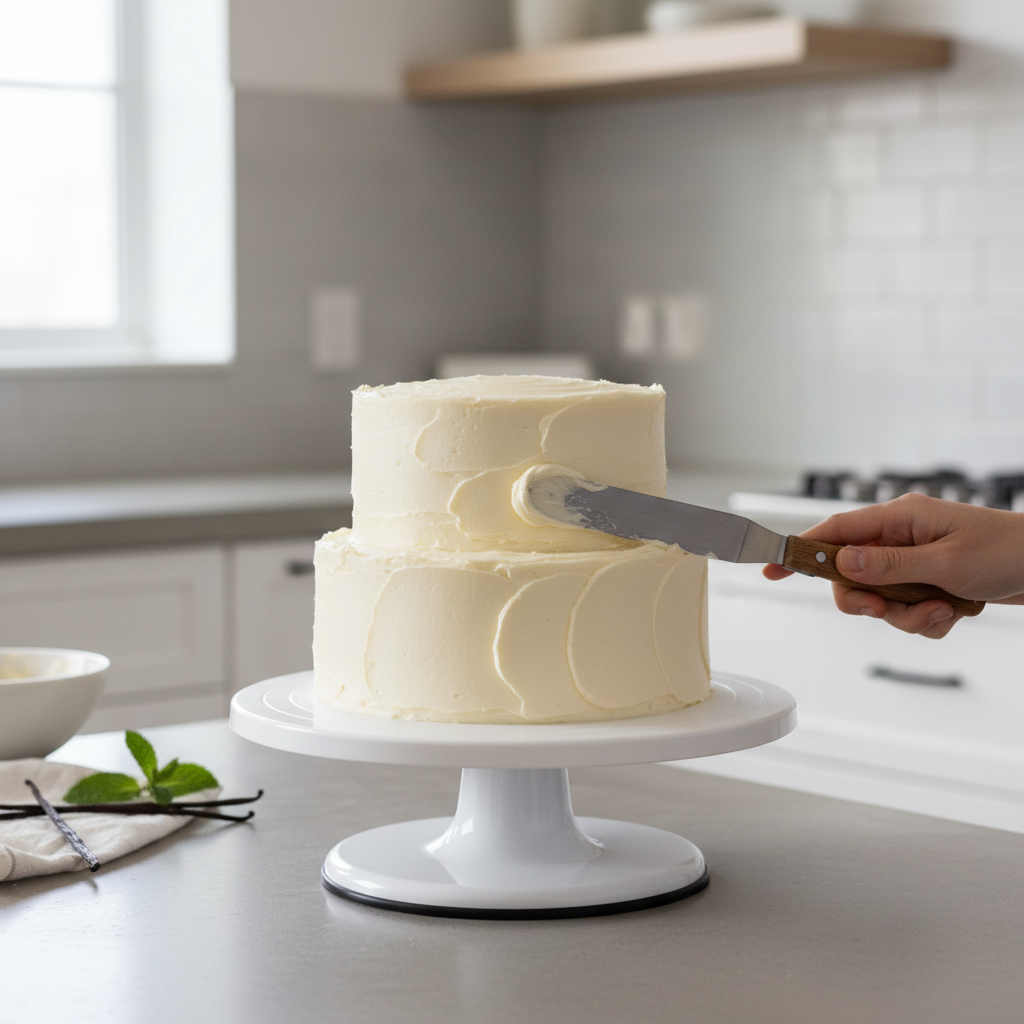
Small but important: Frost only after the cake is fully cool, otherwise frosting can melt and slide, and the crumb gets gummy.
Common mistakes that waste your effort (and the fixes)
These are the traps that make people swear off scratch baking, even when the recipe itself is fine.
- Skipping pan prep: Use parchment circles for layers. Grease + parchment is more reliable than “nonstick pan” confidence.
- Overbaking “just to be safe”: Safety thinking makes sense with chicken, but cake dries out quickly. Pull when crumbs are moist, not when the toothpick is bone-dry.
- Ingredient swaps without adjusting expectations: Non-dairy milk often works, but changes browning and tenderness. Alternative flours can require different ratios.
- Overfilling pans: Fill about halfway to two-thirds to prevent overflow and uneven bake.
- Frosting too soon: Warm cake equals melted frosting and torn crumbs.
When it makes sense to get extra help (or change the plan)
If you’ve tried the same style of recipe a few times and your results stay inconsistent, it may not be you, it may be your oven. An inexpensive oven thermometer can reveal hot spots or inaccurate temperature settings.
If you bake for someone with allergies (gluten, eggs, dairy), it’s worth consulting a qualified professional or a trusted allergy-focused baking resource, since substitutions can affect structure and safety. In some cases, cross-contact risk also matters depending on sensitivity.
Conclusion: your next scratch cake will be easier than you think
If you take only a few things from this guide on how to bake a cake from scratch, let it be these: measure flour carefully, stop mixing early, and bake to cues instead of fear. That trio solves most dry, dense, and sunken-cake problems.
Your move: pick the pan you own, make the base vanilla cake once, then tweak one variable at a time, like swapping milk for buttermilk or turning it into lemon or chocolate. That’s how scratch baking stops feeling like luck and starts feeling like a skill.
Key takeaways (save this)
- Room-temp ingredients help the batter blend evenly and rise better.
- Don’t overmix after flour, “just combined” keeps crumb tender.
- Use parchment for layers, it prevents sticking more than extra greasing.
- Check doneness by texture: springy center, moist crumbs on toothpick.
- Overbaking is the #1 dryness culprit, start checking early.