
vietnamese pho easy usually means one thing: you want that deep, aromatic beef pho vibe on a weeknight, without babysitting a stockpot all day.
Here’s the good news, you can get surprisingly close by leaning on a few shortcuts that cooks in real kitchens use all the time: better store-bought broth, fast flavor boosts, and a realistic approach to toppings.
This recipe focuses on beef pho (phở bò) with a fragrant broth, tender noodles, and the classic build-your-bowl experience. It won’t be identical to a restaurant that simmers bones for 12 hours, but it can still taste clean, balanced, and “pho-like” in under an hour.
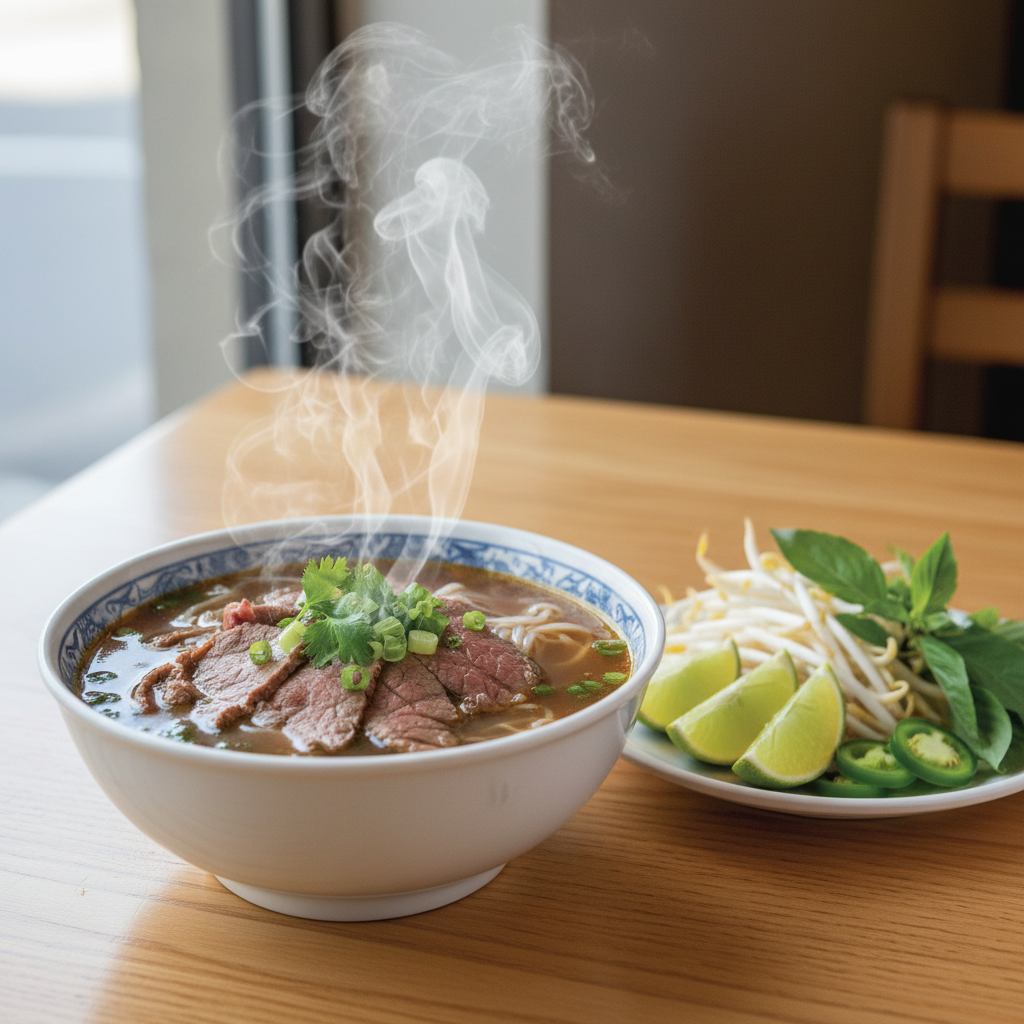
What makes an “easy” beef pho actually work
Most quick pho recipes fail for one of two reasons: the broth tastes flat, or the spices taste raw and dusty. The fix is not “more spice,” it’s better extraction and balance.
- Start with decent broth: choose unsalted or low-sodium beef broth/stock so you can season properly.
- Toast aromatics: charring onion and ginger adds that signature pho smokiness fast.
- Bloom spices briefly: a short simmer helps cinnamon, star anise, and clove taste round, not harsh.
- Season like pho: fish sauce and a touch of sugar often matter more than piling on salt.
According to USDA Food Safety and Inspection Service, perishable foods like cooked broth should not sit at room temperature for more than 2 hours, so if you’re prepping ahead, cool and refrigerate promptly.
Ingredients: shortcuts that still taste authentic
This list is built for typical US grocery stores. If you have an Asian market nearby, you’ll find better noodles and herbs, but you can still make this work with mainstream options.
Broth base
- 8 cups low-sodium beef broth (or half beef, half chicken for a lighter profile)
- 1 medium yellow onion, halved
- 3–4 inch piece fresh ginger, halved lengthwise
- 2–3 tbsp fish sauce (start low, adjust)
- 1–2 tsp sugar (or rock sugar if you have it)
- Salt as needed
Pho spice blend (quick version)
- 2 whole star anise
- 1 cinnamon stick
- 3–4 whole cloves
- 1 tsp coriander seeds (optional but helpful)
- 1 black cardamom pod (optional)
Noodles & beef
- 12–16 oz dried rice noodles (bánh phở style if possible)
- 12–16 oz thinly sliced beef (eye of round, top sirloin, or brisket sliced paper-thin)
Toppings (choose a few)
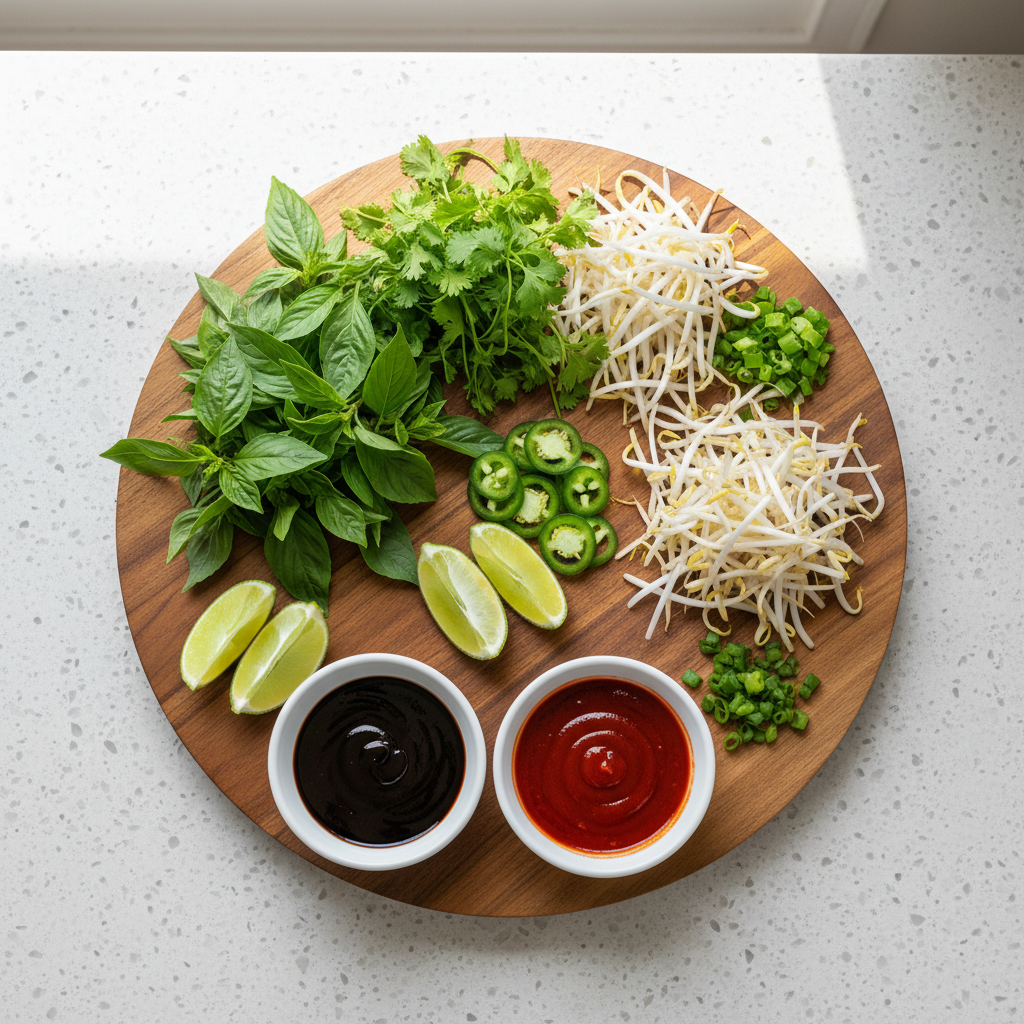
- Bean sprouts, Thai basil (or regular basil), cilantro, lime wedges
- Thin sliced white onion or scallions
- Jalapeño or Thai chili
- Hoisin sauce, sriracha (optional)
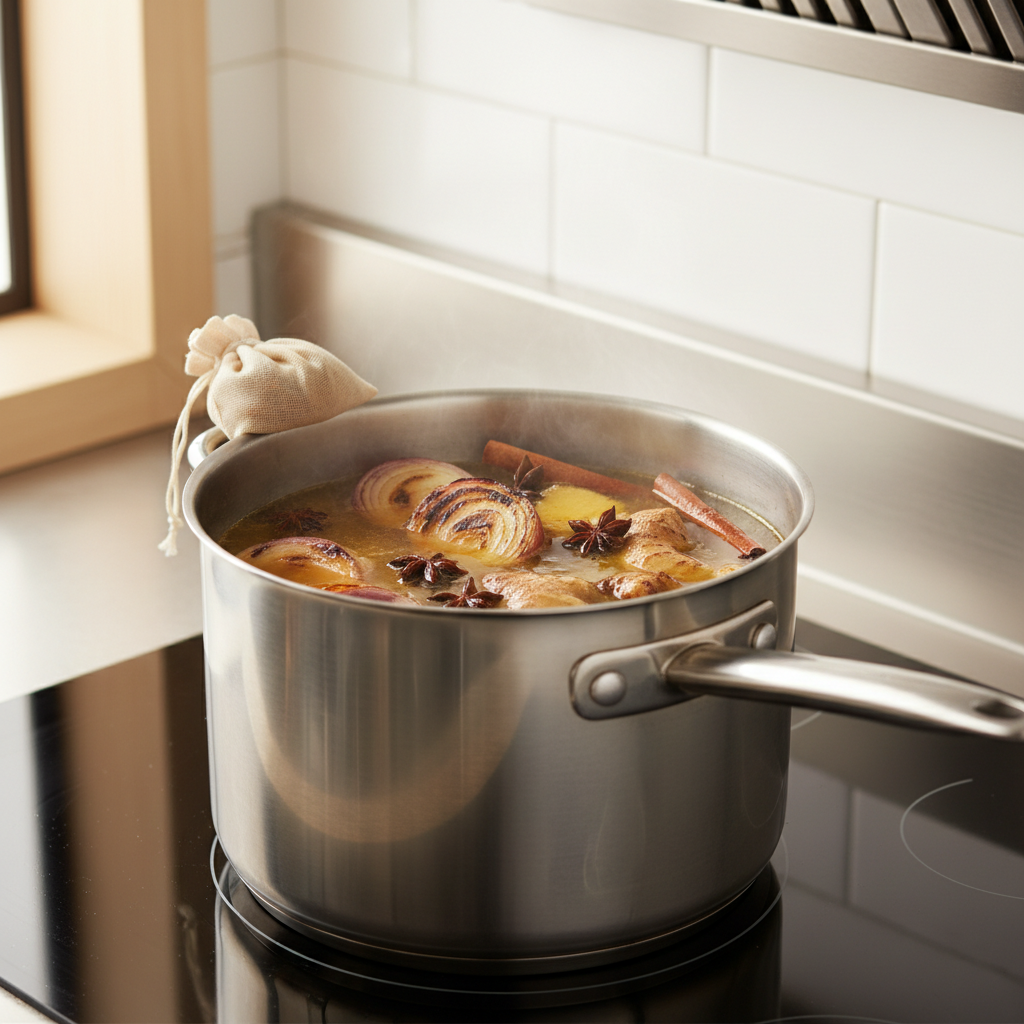
Step-by-step: vietnamese pho easy beef broth in under 60 minutes
This method prioritizes aroma and clarity. If you like a deeper, darker broth, you can simmer longer, but don’t chase intensity by over-spicing.
1) Char the aromatics
Place onion and ginger cut-side down in a dry skillet or under the broiler until you see strong browning and a little char, about 5–10 minutes. This step looks simple, but it’s the difference between “beef noodle soup” and pho.
2) Simmer broth with spices
Add broth to a pot, drop in charred onion and ginger, then add spices. Bring to a gentle simmer and cook 25–35 minutes. Skim any foam if it shows up.
3) Season gradually
Remove aromatics and spices. Add fish sauce and sugar, then taste. You’re aiming for savory first, then a soft sweetness in the background. Add salt only after fish sauce, since fish sauce brings its own salinity.
4) Prep noodles correctly
Cook rice noodles based on package directions, then rinse briefly to stop carryover cooking. Overcooked noodles turn mushy fast once hot broth hits.
5) Cook the beef safely
For thin raw slices, put beef in the bowl and pour very hot broth over it to cook through. If you’re unsure about thickness or serving kids/pregnant guests, quickly blanch slices in the simmering broth for safety and peace of mind.
According to CDC, using a food thermometer and following safe handling practices helps reduce foodborne illness risk, especially with raw or undercooked meats.
Quick timing plan (so dinner doesn’t spiral)
If “easy” matters, timing matters. Here’s a realistic flow for a weeknight.
| Task | When to do it | Time |
|---|---|---|
| Char onion & ginger | Start | 5–10 min |
| Simmer broth with spices | While you prep toppings | 25–35 min |
| Slice herbs, limes, onions | During simmer | 10 min |
| Cook noodles | Last 10 minutes | 5–8 min |
| Assemble bowls | End | 5 min |
Self-check: which pho shortcut level fits you?
A lot of people get stuck because they pick the wrong “easy.” Use this quick checklist to choose your path.
- I want the fastest option: use boxed beef broth + char onion/ginger + spices 20 minutes.
- I want richer flavor but still easy: add a small piece of beef shank or oxtail and simmer 60–90 minutes if time allows.
- I’m avoiding fish sauce: use a little soy sauce plus extra salt, and expect a slightly different aroma.
- I’m gluten-free: rice noodles are usually safe, but check labels for sauces and broth.
- I hate clutter: use a tea infuser or spice bag so you can lift spices out cleanly.
Common mistakes (and what to do instead)
Small choices can throw the bowl off. These are the issues that show up most with a vietnamese pho easy approach.
- Spices taste bitter: simmer shorter, remove spices earlier, and avoid crushing them too much.
- Broth tastes like plain beef stock: char aromatics more, add a little more fish sauce, and balance with a pinch more sugar.
- Broth tastes salty: dilute with water or unsalted broth, then re-check fish sauce at the end.
- Noodles clump: rinse after cooking and toss with a tiny splash of neutral oil if they sit.
- Beef turns chewy: slice thinner across the grain, or pre-blanch quickly instead of cooking too long in the bowl.
Practical upgrades when you have extra time
If you make this once and like it, the next bowl gets even better with small upgrades, not harder techniques.
- Freeze “pho broth cubes”: reduce broth slightly, cool, freeze in portions, then add water when reheating.
- Use better noodles: bánh phở rice noodles hold texture better than some thin supermarket vermicelli.
- Add daikon or apple: a small chunk can add clean sweetness, remove before serving.
- Try a mixed-beef approach: a few meatballs or cooked brisket plus raw slices gives more texture variety.
Key takeaways + serving notes
- Charred onion and ginger do heavy lifting for pho flavor in little time.
- Season in layers: broth first, then fish sauce, then sugar, salt last.
- Keep noodles springy, assemble bowls right before eating.
- If you’re serving anyone with higher food-safety risk, consider fully cooking beef in the pot.
Make it tonight with the basics, then adjust one variable next time, more char, a slightly longer simmer, or upgraded noodles. That’s how an “easy” recipe turns into your reliable house version.
If you want a simple next step, set up a small topping tray and let everyone build their bowl, it’s the fastest way to make homemade pho feel like the real experience.
FAQ
- What cut of beef is best for easy beef pho?
Eye of round is popular because it slices thin and cooks quickly in hot broth. Top sirloin also works. If slicing feels hard, partially freeze the meat 20–30 minutes so it firms up. - Can I make vietnamese pho easy without fish sauce?
You can, but the broth will taste different. Many people swap in soy sauce plus salt, or use a small amount of anchovy-free “umami” seasoning. Taste carefully and keep the seasoning gentle. - How do I keep the broth clear?
Use a gentle simmer, not a rolling boil, and skim foam early. Removing spices and aromatics on time also prevents cloudy, over-extracted flavors. - Do I have to toast the spices?
Not strictly, but it helps. If you skip toasting, at least simmer long enough for the spice aroma to soften, and don’t overdo cloves, they can dominate quickly. - Are rice noodles gluten-free?
Often yes, but brands vary and cross-contact can happen. If you have celiac disease or high sensitivity, check packaging and consider certified gluten-free products. - How long does pho broth last in the fridge?
Many home cooks use 3–4 days as a practical window when stored cold in a sealed container. When in doubt, follow food-safety guidance, reheat to a full boil, and discard if it smells off. - What’s the easiest way to prep ahead?
Make the broth, strain it, cool, refrigerate. Next day, reheat, cook noodles fresh, then assemble. This keeps the noodles from turning soft and makes dinner feel instant.
If you’re trying to make vietnamese pho easy for busy weeknights, it often helps to treat the broth like a “base” you improve over a couple tries, keep notes on your fish sauce and sugar levels, and build a toppings routine that fits your grocery options.