
Baked chicken thighs are one of the easiest ways to get juicy, flavorful chicken without babysitting a pan, but they can still turn rubbery, pale, or greasy if the heat and timing feel like guesswork.
This guide gives you a dependable oven method, plus a few smart tweaks for skin-on vs. boneless, different ovens, and the “why is my chicken watery?” moments that trip people up.
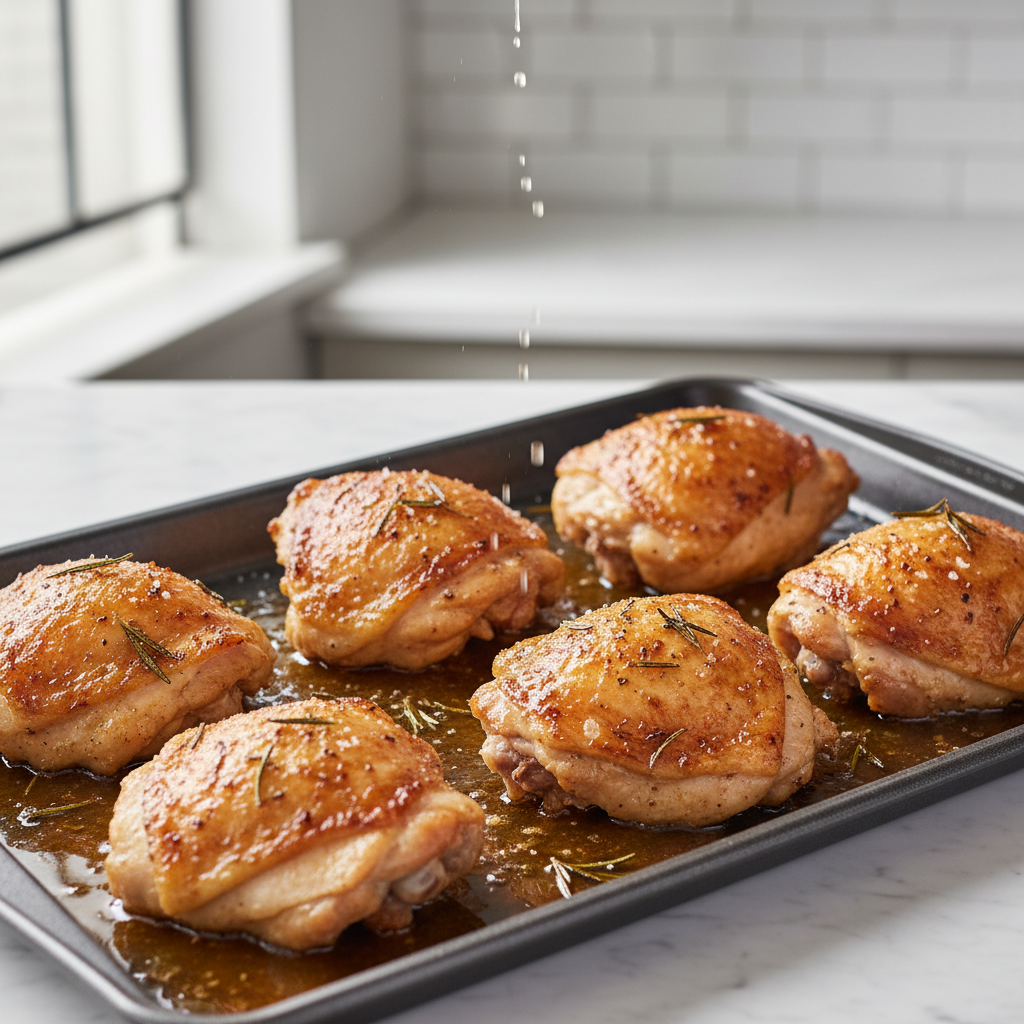
Along the way you’ll get a timing table, a quick doneness checklist, and a few seasoning “routes” so you can repeat the win without overthinking dinner.
What usually makes oven chicken thighs dry (or not crispy)
Chicken thighs are forgiving because they have more fat than breast, but “forgiving” is not the same as “impossible to mess up.” Most issues come from a handful of patterns.
- Oven too cool: Low heat can melt fat slowly and steam the skin, so you get pale, soft skin and a greasy pan.
- Overbaking boneless thighs: They cook faster than bone-in and can overshoot before you notice.
- Skipping a dry surface: Wet skin (marinade, rinse, or condensation) blocks browning.
- Wrong spot in the oven: Too low tends to overcook bottoms before tops brown, too high can burn spices.
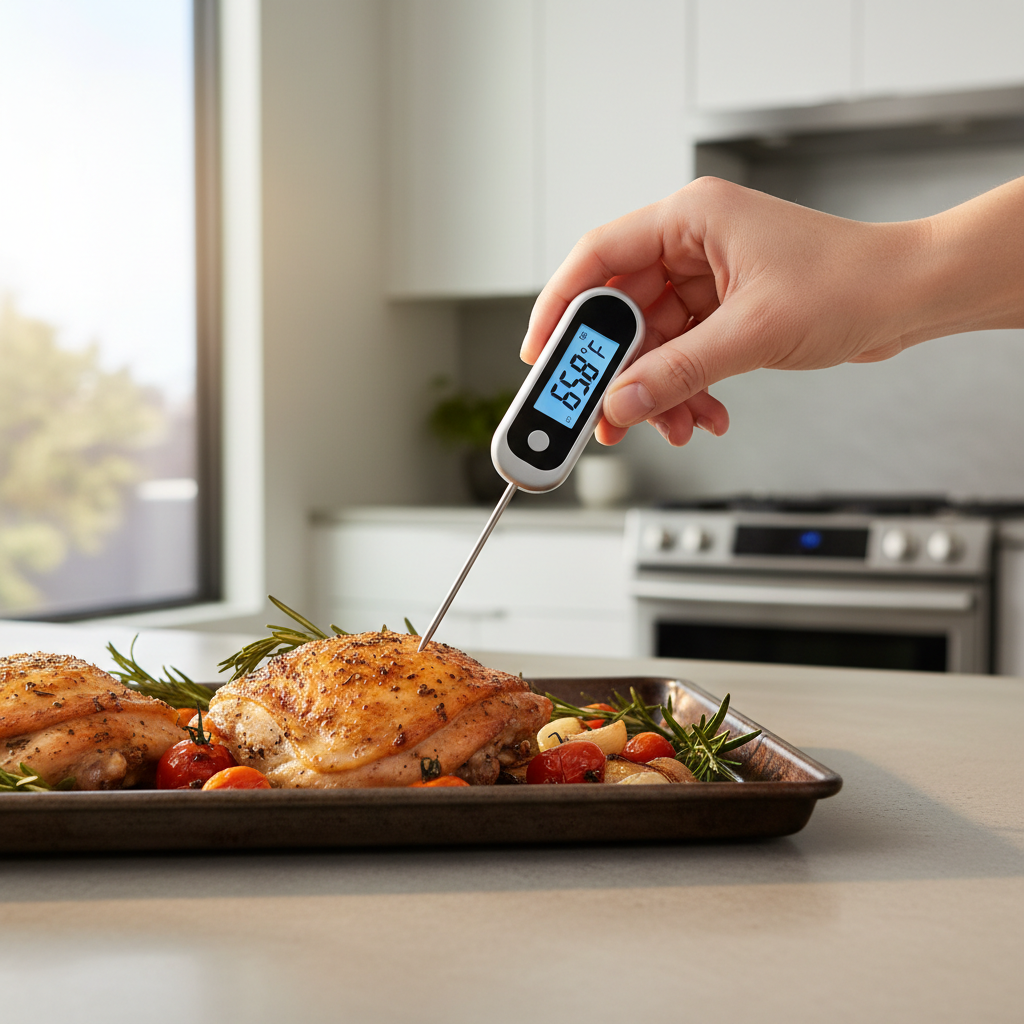
- Relying on time only: Thigh size varies a lot, so a thermometer matters more than a timer.
According to USDA Food Safety and Inspection Service, poultry should reach 165°F at the thickest part for safety, so your “juicy” goal still needs that minimum baseline.
The core recipe: juicy baked chicken thighs (reliable method)
This method aims for a balance: hot enough to brown, long enough to render fat, simple enough for a weeknight.
Ingredients (serves 4)
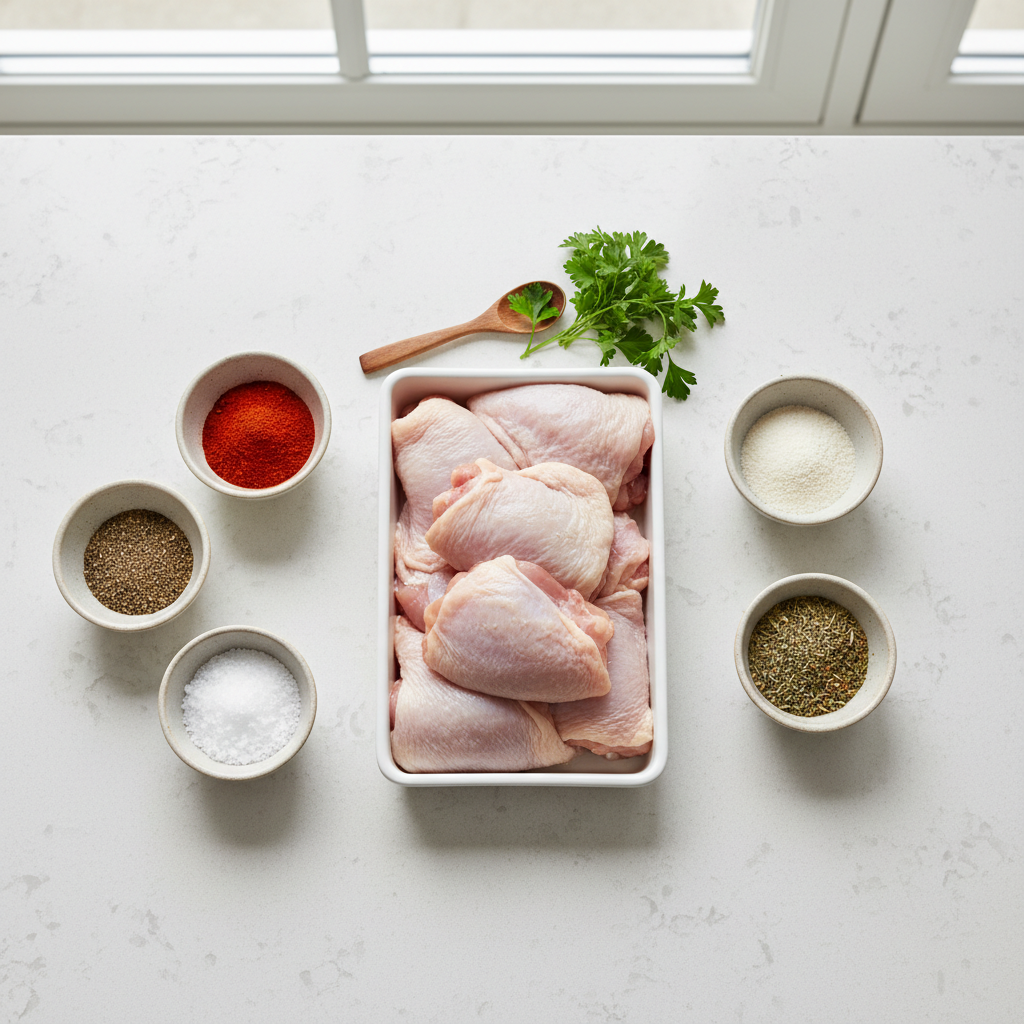
- 6 bone-in, skin-on chicken thighs (about 2.5–3 lb)
- 1–1.5 tsp kosher salt (adjust for taste and brand)
- 1 tsp black pepper
- 1–1.5 tsp paprika (smoked or sweet)
- 1 tsp garlic powder
- 1 tsp onion powder (optional)
- 1–2 tsp neutral oil (optional, mainly for spice adhesion)
Steps
- Heat the oven to 425°F. Put a rimmed sheet pan in the oven while it heats if you want extra browning.
- Dry the chicken well with paper towels, especially the skin side.
- Season evenly. Mix spices, then rub over all sides. If using oil, toss spices with oil first for a paste.
- Arrange skin-side up on the sheet pan. Leave space between pieces so they roast, not steam.
- Bake 30–40 minutes until the thickest part reaches 165°F, then optionally continue a few minutes for crispier skin.
- Rest 5–10 minutes. Juices settle, and you’ll slice less “pink juice” onto the plate.
Key point: For thighs, many cooks prefer pulling them closer to 175–190°F because connective tissue softens and the texture turns more tender, but use your judgment and don’t ignore the minimum safe temperature.
Timing & temperature table (bone-in vs. boneless)
Use the table to set expectations, then confirm with a thermometer. Thighs vary by size, brand, and whether they’re piled too close together.
| Type | Oven Temp | Typical Time | What to watch |
|---|---|---|---|
| Bone-in, skin-on | 425°F | 30–40 min | Skin browning, fat rendering, 165°F+ in thickest part |
| Boneless, skinless | 425°F | 18–28 min | Fast finish, easy to overcook if small pieces |
| Bone-in, skin-on (extra crisp) | 425°F + broil | 30–40 min + 1–3 min | Broil carefully, spices can burn quickly |
| Meal-prep batch (crowded pan) | 425°F | +5–15 min | Steam risk, rotate pans if using two racks |
Quick self-check: are your thighs set up to succeed?
Before you bake, a 30-second scan can prevent most of the “why didn’t this work?” outcomes.
- Skin dry? If it feels damp, pat again. Crispness starts here.
- Enough space? If thighs touch, they’ll steam at the edges.
- Seasoning salty enough? Under-salting is the most common reason thighs taste “fine” but not craveable.
- Thermometer ready? If you don’t have one, start checking early and look for clear juices, but consider buying an instant-read.
- Pan lined правильно? Foil makes cleanup easy, but parchment can limit browning. Bare metal browns most.
Flavor variations that still keep thighs juicy
The base method stays the same, you’re mostly swapping the rub or glaze. Keep sugar-heavy sauces for the end so they don’t scorch.
1) Lemon-herb (bright, not heavy)
- Salt, pepper, garlic powder
- Dried oregano or Italian seasoning
- Lemon zest (add before baking), lemon juice (add after baking)
2) BBQ glaze (sticky, weeknight-friendly)
- Use the base seasoning, bake until almost done
- Brush BBQ sauce during the last 5–8 minutes
- Optional: 1–2 minutes of broil, watching closely
3) Spicy-sweet (balanced heat)
- Smoked paprika + a pinch of cayenne
- Optional: a small drizzle of honey in the last 3–5 minutes
Practical tips: crispier skin, less smoke, easier cleanup
These are the little moves people tend to skip, then wonder why the result feels “almost.”
- Use a rack if you like drier heat: Elevating thighs helps hot air circulate, but drips can smoke. Add a thin layer of water to the pan under the rack if your oven runs smoky.
- Choose the right rack position: Upper-middle usually browns best without torching the spices.
- Hot pan trick: A preheated sheet pan can jump-start browning, just place chicken carefully to avoid splatter.
- Rest is not optional: Cutting immediately makes juices flood out, and the meat feels drier even if you nailed the temp.
- Save the rendered fat: Strain and refrigerate, it’s great for roasting potatoes, but store and use with common food-safety sense.
Common mistakes (and what to do instead)
- “I rinsed the chicken.” That can spread bacteria around the sink area. Pat dry and focus on proper cooking temps instead.
- “I used a sugary rub from the start.” Sugar burns. Bake with a savory base, then glaze near the end.
- “My thighs leaked a lot of liquid.” Some packaging contains added solution, and thighs naturally release juices. Don’t panic, just give space on the pan and use higher heat.
- “The skin is still floppy.” Next time dry more, bake a bit longer, or finish with a short broil, but keep an eye on smoke.
- “I cooked to 165°F and it’s still chewy.” Thighs often feel more tender closer to 175–190°F, but avoid guessing; climb gradually and test.
When to be extra careful (food safety & special situations)
If you’re cooking for someone pregnant, older adults, or anyone with a higher risk from foodborne illness, it’s worth being more strict about temperature checks and cross-contamination habits. When in doubt about doneness, keep cooking and re-check with a thermometer.
If you’re unsure about safe storage or reheating, or you’re managing a medical diet (sodium limits, for example), it’s smart to consult a qualified professional for personalized guidance.
Conclusion: your repeatable game plan
When baked chicken thighs disappoint, it’s rarely “bad chicken,” it’s usually moisture on the skin, a crowded pan, or trusting a timer more than the internal temperature.
For your next run, stick with 425°F, dry the surface, leave space, and start checking early with an instant-read thermometer. Once the method feels automatic, rotate flavors with glazes and rubs instead of changing the technique every time.
FAQ
How long do baked chicken thighs take at 400°F instead of 425°F?
They usually take a bit longer and the skin may brown less aggressively. Expect roughly 5–15 extra minutes depending on size, and confirm doneness with a thermometer rather than chasing a specific minute mark.
Should I cover chicken thighs with foil in the oven?
Most of the time, no. Foil traps steam and makes crisp skin harder. If your spices are browning too fast, a loose foil tent can help, then remove it for the last stretch.
Can I use this method for boneless, skinless thighs?
Yes, but start checking earlier because they cook fast. They won’t get crispy skin, so focus on seasoning and not overbaking.
Why are my baked thighs pink near the bone?
Poultry can sometimes look slightly pink near bones even when fully cooked, especially with certain freezing and cooking conditions. Temperature is the reliable indicator; aim for at least 165°F in the thickest part.
Do I need to flip chicken thighs while baking?
Not usually for skin-on thighs, because you want the skin facing up to dry and brown. If you’re baking skinless pieces, flipping once can help even browning, but it’s optional.
What’s the best way to reheat leftovers so they stay juicy?
A gentle oven reheat (around 325–350°F) works well. Add a tiny splash of broth to the pan and cover loosely to prevent drying, then uncover briefly if you want to re-crisp.
Can I marinate and still get crispy skin?
You can, but crispness gets harder because marinades add surface moisture. Pat the thighs dry before baking and consider using a dry rub instead, or save a wet sauce for the last few minutes.
If you’re trying to make baked chicken thighs part of your weekly rotation, it helps to write down your “house method” once, oven temp, pan setup, and the internal temperature you like, then you’re only changing flavors, not reinventing dinner every time.